Wine Tasting Tips: Experience Exquisite Tastings
Reading time: 9 minutes
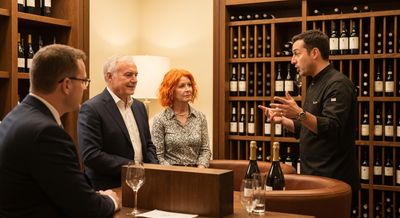
Picture this: your sugar daddy leads you into an intimate wine cellar in Saint-Émilion, where you're tasting a 2015 Château Pavie – and you don't know whether to smell the glass first or just start drinking. Wine tasting tips aren't just useful for sugar babies, they're often decisive for shining at exclusive arrangements. A professional understanding of fine wines shows style and interest in your partner's culture – and turns a good evening into an unforgettable one.
According to a 2023 study by the German Wine Institute, 68% of premium wine consumers say that shared tastings deepen their relationships. In sugar dating, moments like these open not only exquisite bottles, but also doors to deeper conversations and long-term arrangements.
The Basics of Wine Tasting for Beginners
Wine tasting tips start with the right technique. The classic five-step system of French sommeliers consists of looking, swirling, smelling, tasting, and savoring the finish. This method was developed in 1959 by the legendary sommelier Georges Pertuiset at the Paris restaurant Maxim's and remains the standard at professional tastings.
When looking, hold the glass against a white background – ideally a tablecloth or a napkin. The color reveals a lot about age and origin. A young Bordeaux shows a deep purple, while an aged Burgundy develops amber hues.
Swirling is about bringing oxygen together with the wine. Fill the glass only one third full and move it in small circles. This technique releases aromas and shows the so-called "tears" or "church windows" on the glass wall – an indicator of alcohol content and quality.
Developing the Right Nose for Wine Tasting
Your nose can detect over 10,000 different aromas – far more than your tongue. According to the Wine & Spirit Education Trust, trained tasters can identify up to 200 specific wine aromas. Smell first without swirling, then after contact with oxygen. Make a mental note of three layers of scent: primary (fruit), secondary (fermentation), and tertiary (aging).
A 2019 Sancerre typically smells of gooseberry and wet stone. An aged 2010 Barolo develops notes of tar, roses, and dried plums. Recognizing these differences shows your sugar daddy that you appreciate the experience and engage with his passion.
Sommelier Etiquette at High-End Tastings
Sommelier etiquette differs significantly from everyday wine drinking. At professional tastings, you don't swallow, you spit – even with bottles over $500. The renowned sommelier Arvid Rosengren of the Stockholm restaurant Frantzén explains in his 2022 reference book "The Art of Wine Service" that even at 20-course menus with wine pairings, no one should get drunk.
Always hold your glass by the stem, never by the bowl. Otherwise, the warmth of your hand changes the temperature and distorts the flavor. White wines are served at 46-54°F, light reds at 57-61°F, and full-bodied reds at 61-64°F. A wine that's too warm tastes alcoholic, one that's too cold seems closed.
When the sommelier pours you a taste, simply nod in approval after tasting. Long explanations are unnecessary – a professional "Excellent" or "Perfect temperature" is enough. At exclusive rooftop bar arrangements, you can work this knowledge in subtly without coming across as lecturing.
The Right Vocabulary for Wine Tasting
Avoid beginner mistakes like calling every pleasant wine "sweet." Technical terms like "mineral," "tannic," or "full-bodied" show competence. A wine can be "balanced" (acidity, alcohol, and fruit in harmony), "complex" (layered aromas), or "long" (the aftertaste lingers).
Since 2018, the international wine academy has officially distinguished 12 basic flavor profiles in wine: from "citrusfruity" to "oaky" to "floral." This system helps you communicate impressions precisely without lapsing into vague descriptions.
Mastering Wine Pairing with Fine Dining
Wine pairing is the supreme discipline at an arrangement dinner. The classic rule "white wine with fish, red wine with meat" falls short. Modern sommeliers work with the contrast or harmony principle. A fatty tuna can easily handle a light Pinot Noir, while a delicate turbot with a creamy sauce prefers a Burgundian Chardonnay.
The three-star restaurant Vendôme in Bergisch Gladbach, Germany, rated with 19 Gault-Millau points, has offered a special "pairing menu" since 2020 in which sommelier Dominik Trick explains the choice between contrast and harmony for every course. With foie gras, for example, he recommends either a sweet Sauternes (harmony) or a dry Riesling (contrast) – both work perfectly, but create completely different experiences.
Understanding Regional Wine Culture
French wine culture differs fundamentally from Italian or German wine culture. In France, terroir counts – the specific soil and microclimate of a vineyard. A Chablis from the "Les Clos" site tastes distinctly different from one from "Vaudésir," even though they lie just 500 yards apart.
In Italy, the grape variety takes center stage. A Sangiovese from Tuscany can be sold as Chianti, Brunello, or Vino Nobile – depending on the growing region and aging. Knowing these differences lets you ask smart follow-up questions at a tasting and shows genuine interest.
Exclusive Wine Regions for Special Moments
If you want to put wine tasting tips into practice like a pro, you should know at least five world-class regions. The Bordeaux region, with its 60 appellations, produces structured reds that age well. According to Wine Spectator, the 2018 harvest is considered a "vintage of the century" with 98 out of 100 points.
Burgundy works with single vineyards instead of cuvées. A Romanée-Conti – the most expensive wine in the world, with prices starting at $15,000 per bottle – comes from just 1.8 hectares (about 4.4 acres) of vineyard. If your sugar daddy opens such a rarity, it's a sign of the highest appreciation.
German Rieslings from the Rheingau or the Mosel reach world-class quality. The Egon Müller estate produces wines like the "Scharzhofberger Trockenbeerenauslese" that fetch over $10,000 per bottle at auction. The balance between sweetness and acidity makes these wines unmistakable.
Discovering the New World of Wine
California's Napa Valley revolutionized the wine world in 1976 at the legendary "Judgment of Paris," when Napa wines beat French grands crus. Today, estates like Opus One or Screaming Eagle produce cult wines at four-figure prices. If you show knowledge of this history at a tasting, you score points with education instead of showing off.
Australian Shiraz from the Barossa Valley or South African Chenin Blancs from Stellenbosch broaden your horizons. Montes from Chile, named "World's Best Vineyard" in 2021, shows that top wines no longer come exclusively from Europe.
Practical Tips for Your Next Wine Tasting
Prepare for tasting evenings by doing some research beforehand. If your partner is planning a tasting at the renowned Berlin restaurant Nobelhart & Schmutzig – awarded a Michelin star in 2023 – read the wine list online. The restaurant focuses on German natural wines, often from biodynamic farming.
Avoid strong perfumes or aftershaves before a tasting. According to a 2022 University of California study, as little as 5 micrograms of synthetic fragrance disrupts aroma perception by up to 40%. Your well-groomed men's grooming routine should rely on unscented products on tasting day.
Discreetly jot down your impressions on your smartphone or in a small notebook. Apps like Vivino or Delectable help you document wines and look them up later. Otherwise, after three months you'll mix up a 2016 Châteauneuf-du-Pape with a 2017 – details that might matter to your partner.
The Right Investment in Wine Knowledge
A WSET Level 1 course costs about $250-$350 and provides solid foundational knowledge in two days. The Wine & Spirit Education Trust was founded in 1969 and is recognized worldwide. Over 100,000 people take WSET courses every year – an investment that pays off many times over in sugar dating.
Alternatively, many wine shops offer inexpensive beginner tastings. Wine retailers across the US regularly host tastings for $15-$25 where you sample 6-8 wines and learn the basics. These low-threshold offerings let you practice without pressure.
Avoiding Common Wine Tasting Mistakes
The biggest beginner mistake is drinking too much instead of tasting. At a professional tasting with 12 wines, you'd consume more than a bottle – far too much to still taste with any nuance. After the fourth wine, taste sensitivity declines noticeably.
Avoid commenting on every wine. Quality over quantity applies to remarks, too. A precise observation about one detail – "Interesting how the minerality balances the fruit here" – comes across as more competent than blanket praise for every glass.
Don't confuse price with quality. A $500 wine isn't automatically ten times better than one for $50. Beyond a certain point, you're paying for rarity, history, and prestige. Your authenticity in sugar dating also shows in being honest when you like a less expensive wine better.
Frequently Asked Questions About Wine Tasting
How do you taste wine properly as a beginner?
Start with the five-step method: look at the wine against a white background, swirl for oxygen contact, smell before and after swirling, move a small sip around your mouth, and pay attention to the aftertaste. Fill the glass only one third full and hold it by the stem. At first, focus on basic impressions like fruity, dry, or tannic before you try to identify more specific aromas.
Which wine regions should a gay sugar baby know?
The five most important regions are Bordeaux and Burgundy in France, Tuscany in Italy, the Rheingau in Germany, and Napa Valley in California. Each region has characteristic styles: Bordeaux for structured reds, Burgundy for elegant Pinot Noirs, Tuscany for Sangiovese-based wines, the Rheingau for mineral Rieslings, and Napa for powerful Cabernets. Basic knowledge of these regions enables smart conversation at exclusive tastings.
How do you choose wine pairings for fine dining at a restaurant?
Go by the weight and intensity of the dish, not just the protein. Fatty fish can handle light red wines, while delicate meat goes well with full-bodied whites. Use the contrast or harmony principle: sweet components can be contrasted with dry wines or matched with sweet dessert wines. Trust the sommelier's recommendation, but ask follow-up questions about their thinking – it shows interest and a willingness to learn.
What do sommelier recommendations mean for special arrangement moments?
Sommeliers take the occasion, the season, and personal preferences into account when making recommendations. For romantic moments they often suggest Champagne or elegant Burgundies, for business dinners structured Bordeaux. Discreetly let the sommelier know it's a special occasion – many restaurants have rarities that aren't on the list. A personal recommendation from the sommelier signals exclusivity and appreciation to your partner.
How do you get to know French wine culture at exclusive tastings?
French wine culture is based on the terroir concept and the Appellation d'Origine Contrôlée classification, in place since 1935. If possible, attend tastings of French wines from different regions – from the Loire through the Rhône to Alsace. Learn the grand cru hierarchy in Burgundy and the 1855 classification in Bordeaux. Apps like Vivino provide background information on every wine. French wine culture values tradition and craftsmanship over marketing – an attitude that also signals depth in sugar dating.
Your Path to Becoming a Wine Connoisseur in the Sugar Lifestyle
Wine tasting tips are more than technical knowledge – they are cultural capital in upscale sugar dating. Every tasting is a chance to show your partner that you don't just enter his world, but understand and appreciate it. The investment in wine knowledge pays off in the long run, far beyond individual arrangements.
Start with the basics: learn the five-step method, attend a beginner tasting, and systematically try wines from different regions. Over time, you'll develop a memory for aromas and styles that becomes a conversation topic at every exclusive dinner.
Use the next opportunity to put your knowledge to work. Whether at a private tasting in your sugar daddy's wine cellar or a visit to a Michelin-starred restaurant – your well-prepared wine tasting tips make you an equal partner in enjoyment. Authentic interest beats any feigned expertise, and the combination of both makes you irresistible in the upscale sugar lifestyle.
- Invest in a WSET Level 1 course for professional foundational knowledge
- Attend at least one tasting a month to expand your aroma vocabulary
- Document the wines you taste in an app for future reference
- Research the wine list online before upscale restaurant visits
- Ask the sommelier smart follow-up questions instead of just nodding
- Skip the perfume on the day of an important tasting
Sources: German Wine Institute (https://www.germanwines.de), Wine & Spirit Education Trust (https://www.wsetglobal.com)